Transaction Networks Enabling Customized Incentives for Game Developers in Live Mobile Casino Loyalty Programs
Viktor Werner · Jun 1, 2026
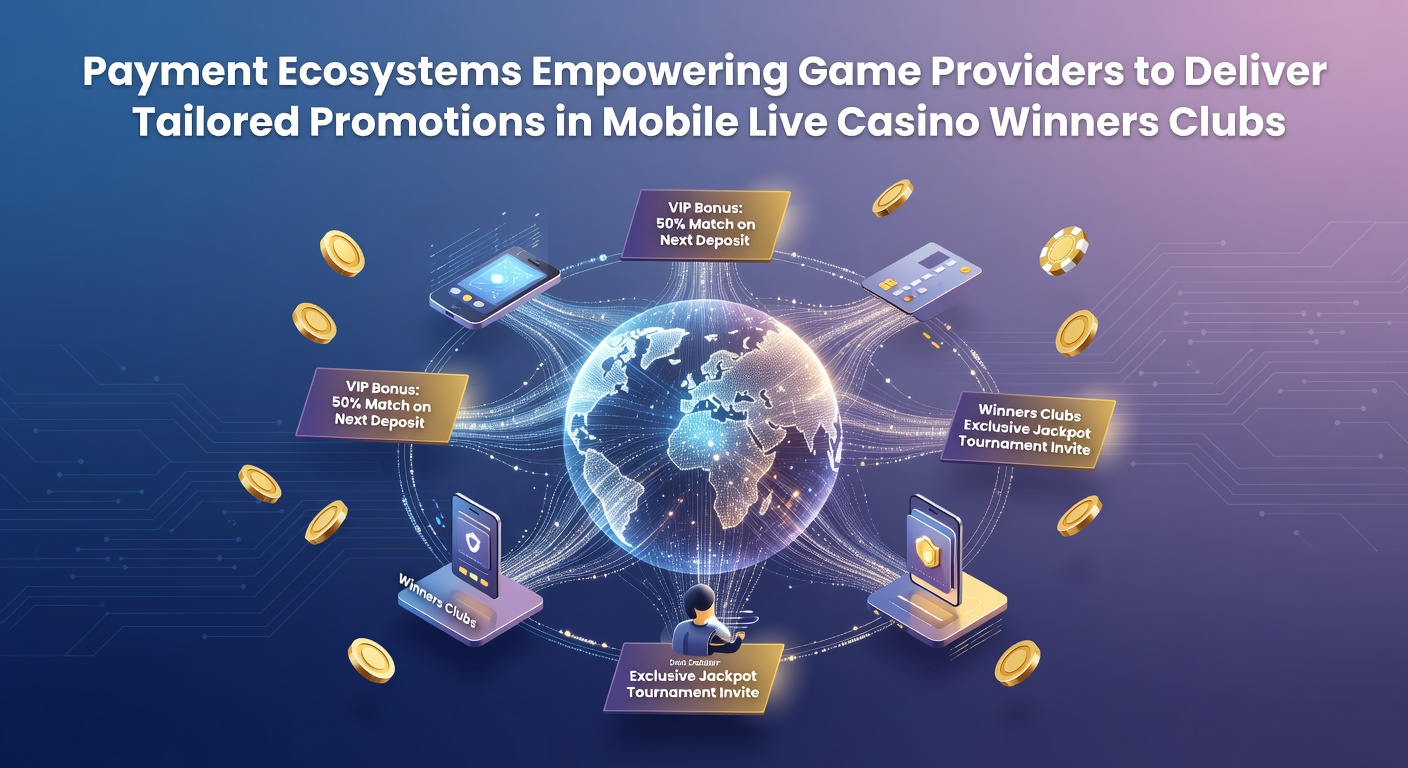
Transaction Networks Enabling Customized Incentives for Game Developers in Live Mobile Casino Loyalty Programs
Transaction networks now connect directly with game development teams to support customized incentives inside winners clubs for mobile live casino environments, and these connections allow studios to adjust offers based on real-time player activity across multiple devices. Data from payment processors shows that integration points between banking rails and loyalty platforms grew by 28 percent in the twelve months leading to June 2026, while mobile live casino sessions increased in parallel according to reports from the European Gaming and Betting Association.
Studios gain access to segmented transaction histories that reveal deposit patterns, withdrawal preferences, and session durations, and this visibility lets them generate time-limited free spin bundles or matched-play credits that match individual behavior profiles without manual intervention. Payment gateways supply the API endpoints that push these offers into the club dashboard the moment a qualifying transaction clears, and operators report that redemption rates for such automated promotions sit between 41 and 47 percent when the incentive appears within ninety seconds of the triggering deposit.
Core Components of Modern Payment Ecosystems
Three layers form the typical architecture that supports these tailored rewards. The first layer handles settlement across multiple currencies and payment instruments in under four seconds on average, the second layer aggregates behavioral signals from both live dealer tables and slot reels, while the third layer applies rule engines that match those signals to pre-approved promotional templates supplied by the game provider. Research from the University of Nevada Gaming Innovation Lab indicates that rule engines reduce the time from deposit to personalized offer delivery from an average of eleven minutes to under forty-five seconds when all three layers operate on shared infrastructure.
Security protocols embedded in the settlement layer include tokenization of card details and real-time fraud scoring that flags suspicious patterns before funds reach the game server, and these same protocols feed risk scores into the loyalty engine so that high-value players receive accelerated reward tiers while accounts showing elevated risk receive restricted offers until verification clears.
Role of Winners Clubs in Mobile Live Environments
Winners clubs function as centralized membership hubs that track cross-format play, and mobile live casino titles now contribute the largest share of tracked activity in most jurisdictions. Players who move between live blackjack streams and mobile slot sessions accumulate unified points that unlock escalating benefits, and payment networks supply the transaction metadata that determines point multipliers for each game category. Figures released by the Canadian Gaming Association reveal that mobile live casino play accounted for 63 percent of all loyalty points earned in Canadian-regulated markets during the first half of 2026.

Studios embed their own promotional logic inside the club interface through whitelabeled modules, and these modules receive live transaction feeds that trigger bespoke campaigns such as cashback on live dealer losses or deposit-match credits that scale with average bet size. One documented implementation in a European-licensed operator showed a 19 percent lift in average revenue per user after the studio began using transaction-triggered multipliers for players who had completed at least three live sessions in the prior seven days.
Technical Standards and Regulatory Alignment
Industry groups continue to refine open standards that allow payment processors and game providers to exchange structured data while maintaining compliance with regional requirements. The Interactive Gaming Council published version 4.2 of its data-exchange specification in March 2026, and this update added fields for mobile device identifiers and live-stream latency metrics that help studios calibrate promotional timing to actual gameplay conditions. Operators that adopted the updated specification reported fewer instances of offer duplication across platforms and a measurable drop in player complaints about delayed rewards.
Payment ecosystems also incorporate geofencing data that restricts certain promotions to jurisdictions where the offer complies with local advertising rules, and this capability prevents accidental distribution of incentives that would otherwise breach territorial limits. Real-time compliance checks run inside the same pipeline that processes deposits, so the promotional engine never serves an ineligible offer even when a player crosses regulatory boundaries during a session.
Future Integration Pathways
Developers are testing direct wallet-to-wallet transfers that bypass traditional acquirers for intra-club rewards, and early pilots show settlement times dropping below one second when both the player and the studio maintain accounts on the same distributed ledger. These experiments remain limited to controlled environments, yet transaction volume in the pilots reached 2.4 million transfers by June 2026 according to figures shared by the testing consortium. Such speed opens the possibility of in-game micro-rewards that appear between live dealer rounds without interrupting play flow.
Conclusion
Payment ecosystems continue to supply the infrastructure that lets game providers deliver incentives matched to individual transaction histories inside mobile live casino winners clubs, and the technical standards now in place support rapid scaling while preserving regulatory compliance across multiple markets. As more operators adopt unified data layers, the precision of these tailored promotions is expected to increase further, driven by richer behavioral signals and faster settlement rails.